Calais is the English equivalent of Dover in more ways than one – both look run down and depressed, neither is an advertisement for its country, and neither is at its best on a wet evening. Calais has the additional disadvantage of having been largely destroyed in WWII and rebuilt unsympathetically. On the credit side, however, it has Rodin’s marvellous Les Bourgeois de Calais. It commemorates an incident where Edward III had besieged Calais into submission and demanded that six leading citizens give themselves up for execution if the rest of the population were to be spared. The sculpture shows the six walking out to give themselves up.


I’ve previoudly seen the Paris version, but this version, which sits not far from where the town leaders would have walked out to give themselves up, is even more powerful. (In the event, Edward’s queen interceded and their lives were spared.
I didn’t have to go far inland before I was experiencing the familiar joys of rural France: quiet roads, washed-out colours and red tiles on buildings, gently rolling countryside, and great views from ridges overlooking the landscape.
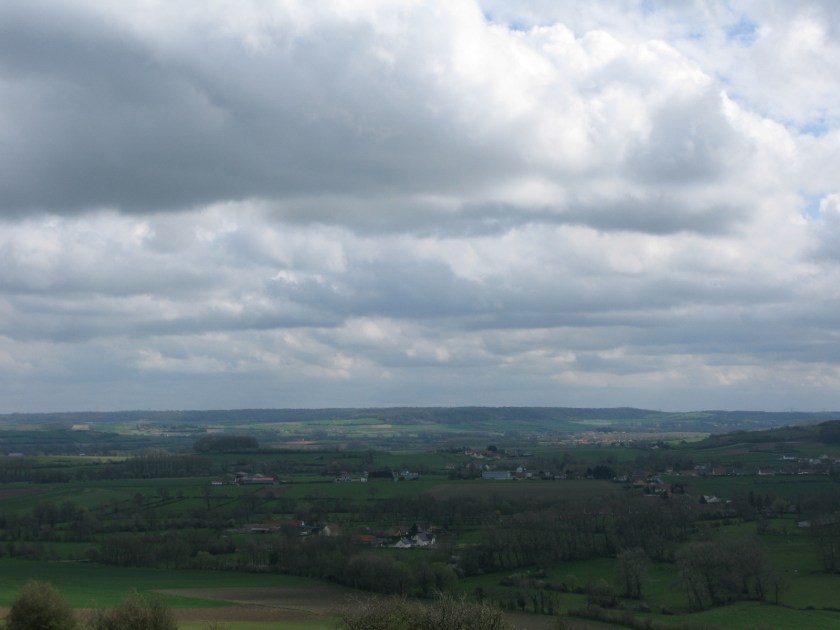
It has been eight years since I walked in France, but it’s all comfortably familiar. It’s good to be back.
Day 37 Route: Calais to Licques via Via Francigena. Terrain: paved and unpaved tracks through forests and fields. Weather: mostly overcast with light showers. Daily distance: 27 km/16.7 miles. Cumulative distance: 865.5 km/536.6 miles. Accommodation: cabin at Les Trois Pommiers, Licques.
 Come Wind, Come Weather