March 17: The first Midlands day

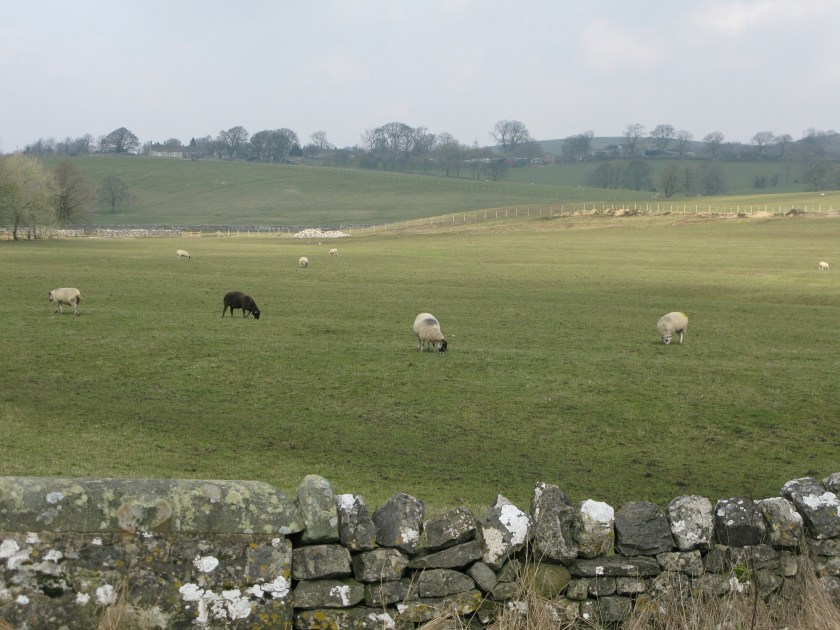
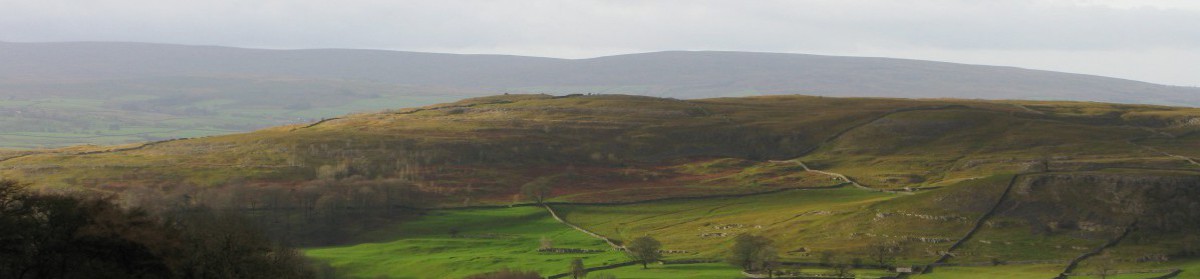
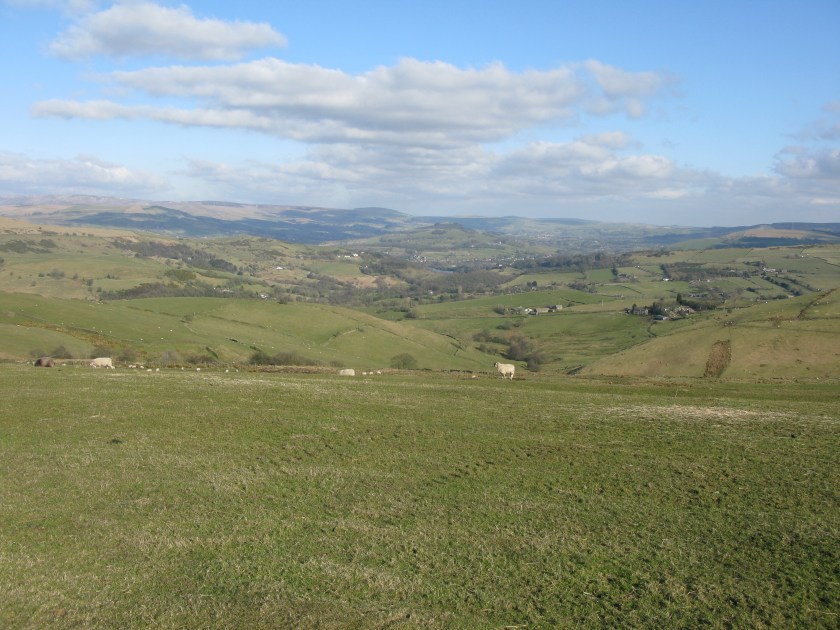
Today the change in the landscape through which I’m walking became even more noticeable.

IMG_2970

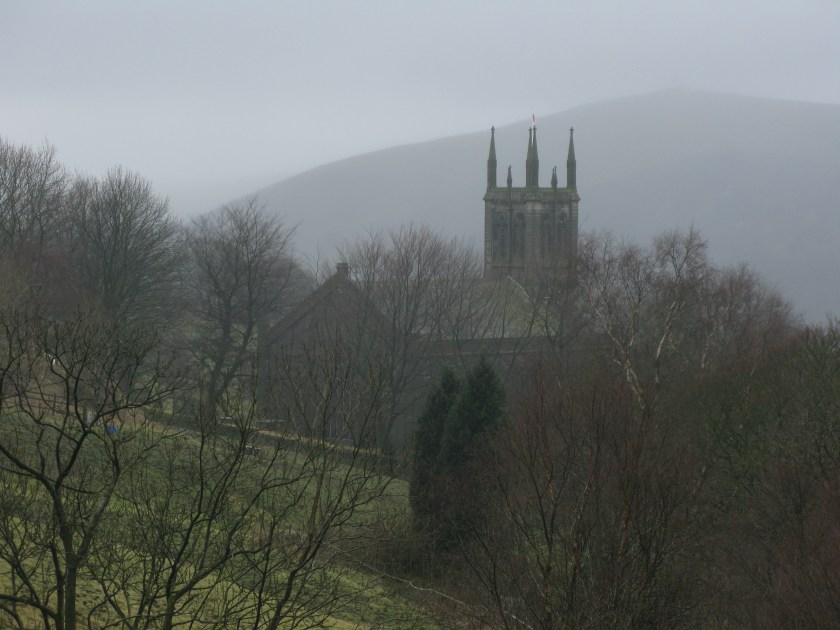
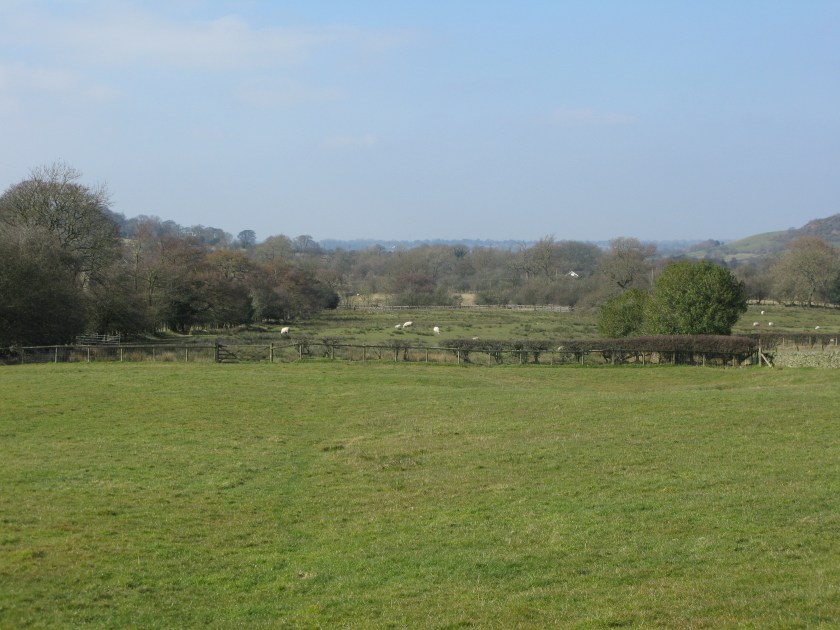
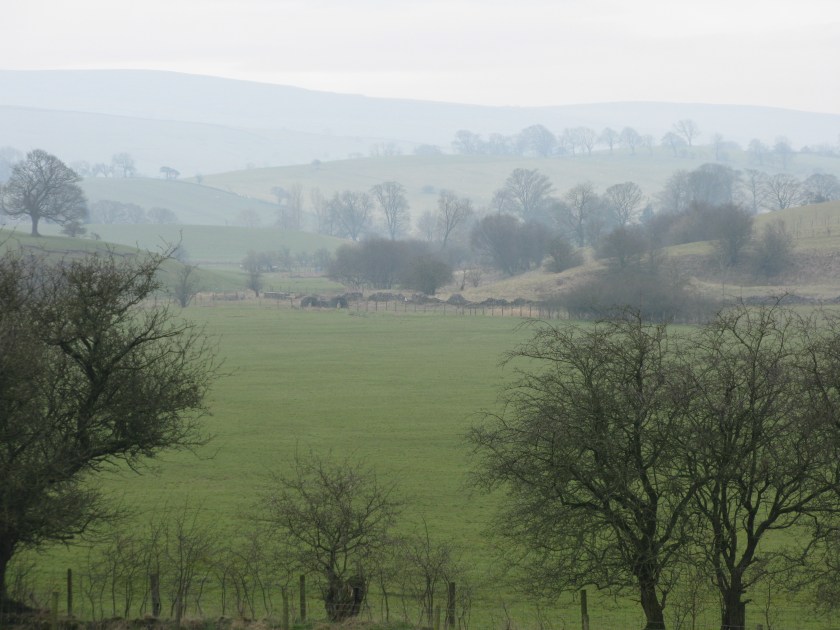
The hills are more gentle, hedgerows rather than walls are starting to separate fields, and farmhouses are starting to be built of brick rather than stone.  I am leaving “the North”, and entering the Midlands: definitely a softer and greener landscape.
IMG_2976

There is one particular memory of Yorkshire that came back today. Yorkshiremen are notorious for being tight with their “brass” – money, that is. A few days ago I had stopped in a pub for lunch. It was a slow day, which the landlord was spending by hiding just inside the door, waiting for people to park in his roadside parking area without coming into the pub. When they did, he’d go out and shout at them. As I left, he was grumbling to another customer that he was having to pay to have the lines in the parking area repainted because people were using it to turn around: “and ’tweren’t my customers wearing off t’paint – they knows t’ park between t’lines”.  When I had arrived  some muck came off my boots, which he insisted on throwing on the fire. I had thought he was just being tidy. It was only later that it struck me that perhaps he was hoping for a free bit of peat.

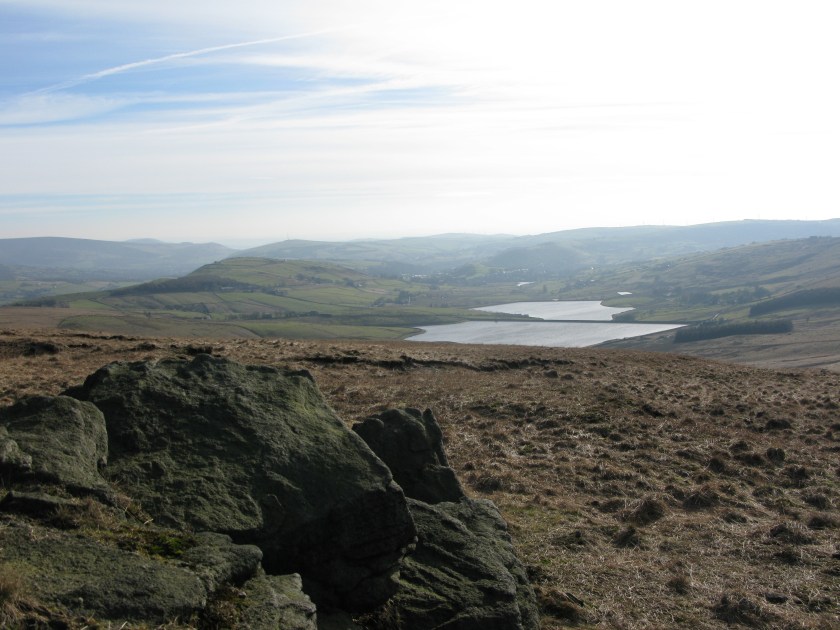
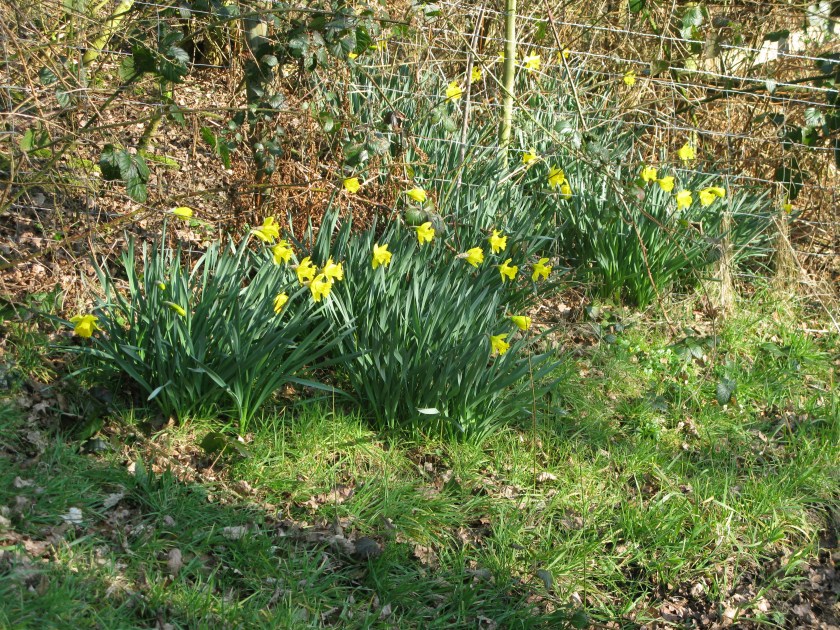
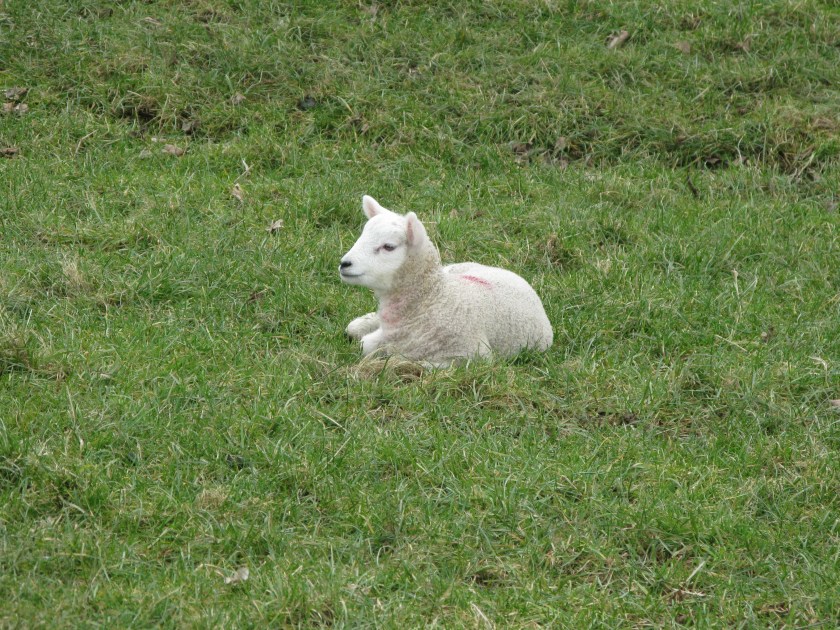
With the change in the landscape, there are more signs of the change in season. Spring is definitely on its way.
IMG_2979

Day 7 Route: Bollington to Rudyard via Gritstone Trail and Staffordshire Way. Terrain: rolling hills, fields, tracks, former railway. Weather: sunny, breezy, cool. Daily distance: 28.5 km/17.7 miles. Cumulative distance: 175.4 km/108.7 miles. Accommodation: Hotel Rudyard, Rudyard
 

March 16: The first day off the moors

Today marked a distinct change in the character of the landscape, as I finally moved down off the high Pennine moors. While the countryside is still hilly, the hills are covered with farmland rather than open moorland.

IMG_2967

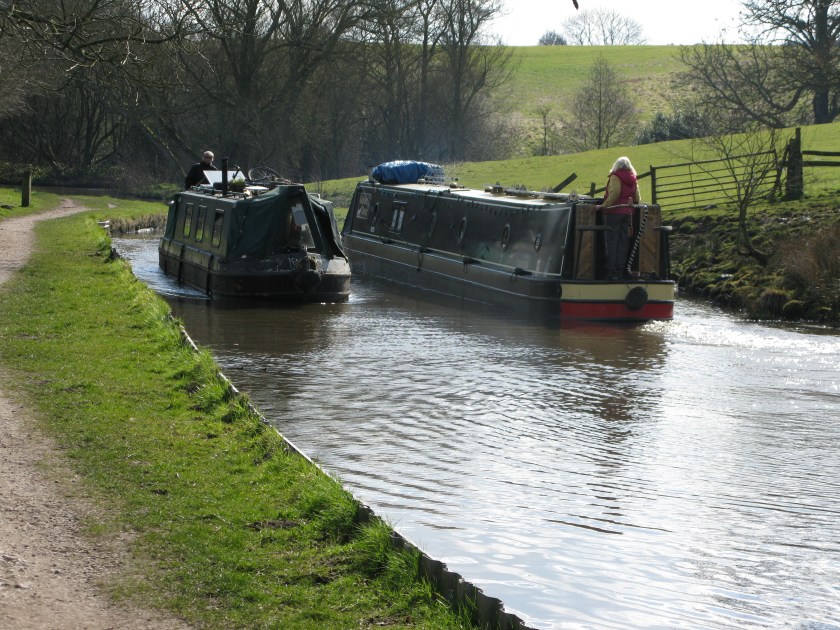
I also spent a good part of the day on a canal towpath. For a relatively brief period, from the mid 18th century to the early 19th century and the coming of the railways, the canals were the cutting-edge technology for moving large quantities of goods. It is an amazing thought that hundreds of miles of canal were dug with no earthmoving technology more advanced than a pick, shovel, and wheelbarrow.  Now, they are used as recreational waterways,and blend comfortably into the landscape.

IMG_2960

Fortunately, my resolution to walk every step of the way wasn’t put to the test, as the owner of the narrow boat going my way didn’t offer me a lift.

One thing I was reminded of today, as the South Pennine hills vanished over the horizon, is that while walking is slow by the standards of most means of transport, it is impressive to look back at the end of the day and realize how much ground one can actually cover. While the thought of actually walking to Rome still seems like a rather ludicrous ambition, the thought of a day’s walk being doable, and being an appreciable distance on the ground and on the map, makes perfect sense.  I just have to keep racking up those days.

Day 6

Route: M67 terminus to Bollington via Tameside Trail, Goyt Valley Way, Peak Forest Canal, and Gritstone Way. Terrain: field paths, canal towpaths. Weather: cool, sunny, increasingly windy. Daily distance: 27.5 km/17.1 miles. Cumulative distance: 146.8 km/91.0 miles. Accommodation: Red Oak Farm, Bollington.

March 15: The first unfamiliar day

I suppose pilgrims in medieval times must have reached a point where they left familiar countryside and got to places about which they had only heard from others.  I reached that point this morning: while the Pennine Way is an old friend, the rest of the walk to Dover will be all new to me.

The omens were not auspicious.  The northeast wind was still blowing, and bringing with it a  hint of rain.  The sky was overcast with low cloud. In short, a grey day.

IMG_2936

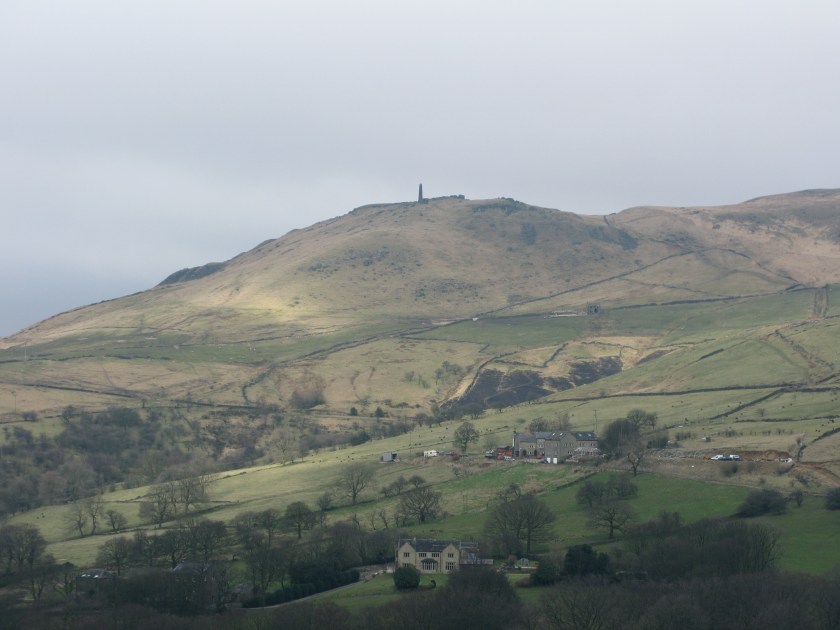
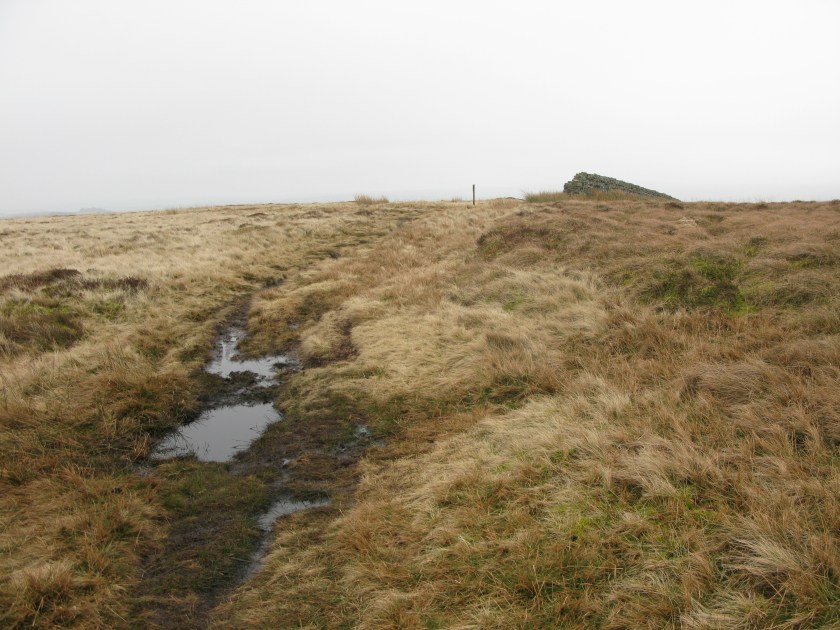
The navigation problems came as the route took me up onto high moorland and into the cloud.  Visibility dropped to perhaps a hundred yards, and tracks multiplied and became confusing and indistinct.  There were no real features to navigate by, but the map showed an “obelisk”.  It was a notable relief when a faint blur in the mist resolved itself into the obelisk (it’s on the shoulder of the hill in the photo below).

Many of these monuments on the South Pennine moors date back to the Napoleonic Wars, but this one was from the First World War, commemorating the dead from the local area. Many of the men from the industrial Pennine valleys were recruited into “Pals’ Battalions”, where men from the same town served together.  The Pals’ Battalions were supposed to help morale, but they also meant that a town’s recruits could be decimated in a day if the unit was in action. It struck me as I stood there that I would in all probability pass cemeteries in Northern France where some of these men now lie.

The cloud lifted somewhat, and my route took me lower, so that I could enjoy the contrast between the green valleys lower down and the high moorland above.

IMG_2943

The day ended with my last long stretch of moorland: tomorrow the landscape will change. It also ended with some luck, as I got the last available room in the only convenient hotel.

Day 5
Route: Standedge to M67 terminus via Oldham Way and Tameside Trail. Terrain: fields, moorland. Weather: cool, overcast, increasingly windy. Daily distance: 30.5 km/18.9 miles. Cumulative distance: 119.3 km/74.1 miles. Accommodation: Premier Inn, Manchester Hyde.

March 14, 2016: The last familiar day

Today marked my last day on familiar paths. The first four days of my journey have followed the Pennine Way,  England’s best-known long distance path, which I walked twenty years ago. After today I turn southwest and then south, through parts of England that I’ve never travelled before, let alone walked.  I won’t be back in familiar countryside until I reach Tuscany.

It should have been an easy day.  After the initial ascent from Mankinholes the rest of the day was virtually flat, contouring around the western edge of the high moorland plateau and looking out over the towns and reservoirs to the west.  The views were spectacular.

IMG_2935

The problem was the wind.  It started as a breeze, but got colder and stronger throughout the day.  It was coming from my  left, across the moors, and eventually it was blowing a near-gale. Keeping my footing over the rocky ground became a constage struggle, not heloped by the fact that the size of my pack gave the wind more to grab at. It made for a tiring day. (On the bright side, however, the freshly washed socks I had tied to the outside of my pack dried quite nicely.)

Day 4
Route: Mankinholes to Standedge via Pennine Way. Terrain: Tracks, high moorland plateau. Weather: Sunny, cold breeze strengthening to strong wind. Daily distance: 1.1 km/13.1 miles. Cumulative distance: 88.8 km/54.7 mles. Accommodation: Carriage House Inn, Standedge.

March 13, 2016: The first sunny day

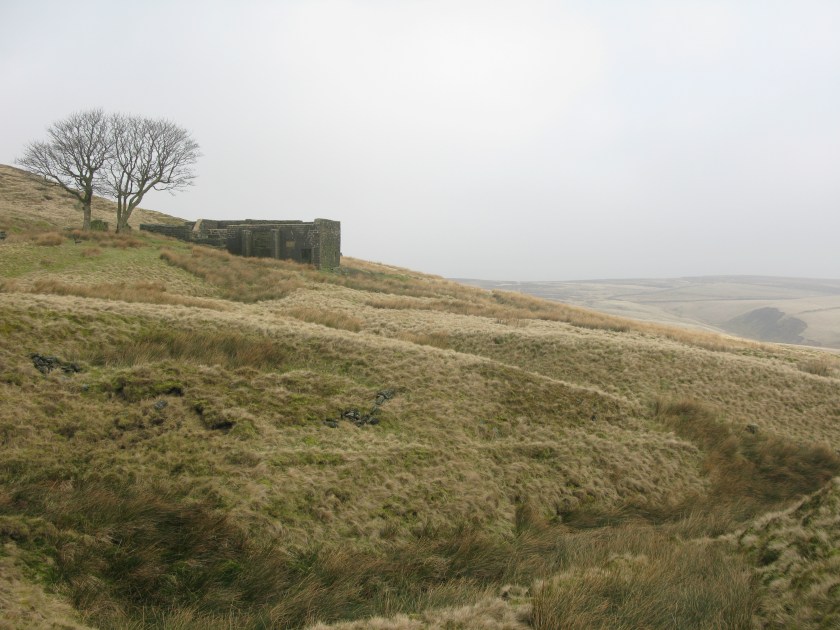
While the forecast was good, the day started misty and overcast.  It was a suitable ambiance for a visit to Top Withins, which was supposedly in Emily Bronte’s mind as the setting for Wuthering Heights.  The Bronte Society admits that the actual house looked nothing like the one described in the novel, even before it became derelict,  but the setting is bleakly gorgeous.

IMG_2912

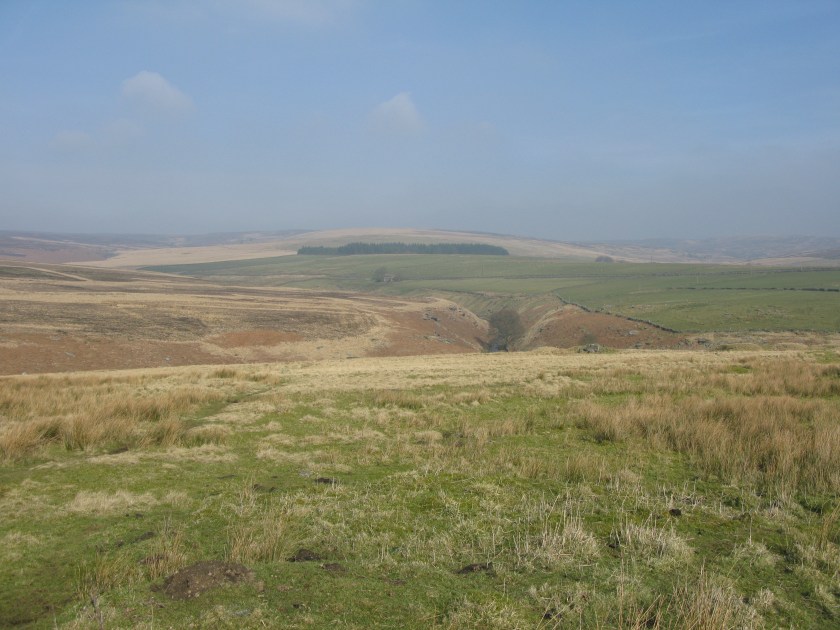
Soon after, the sun broke through and the Pennines showed their softer side.

IMG_2917

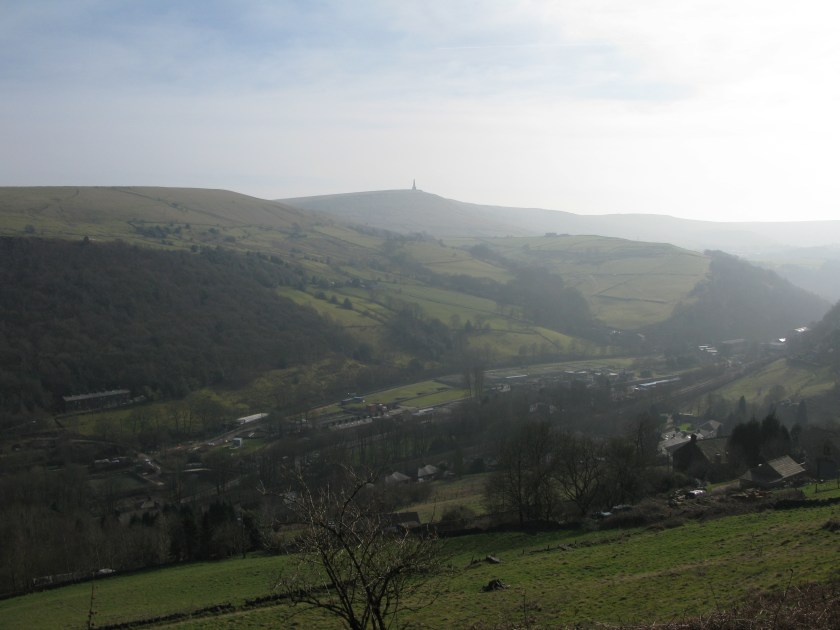
While the day’s walk wasn’t particularly long, it was made more difficult because I was moving against the grain of the landscape. Pennine valleys generally run East and west, while my route is generally southerly.  Eventually I reached Calderdale, with Stoodley Pike monument standing sentinel over the valley.

IMG_2920

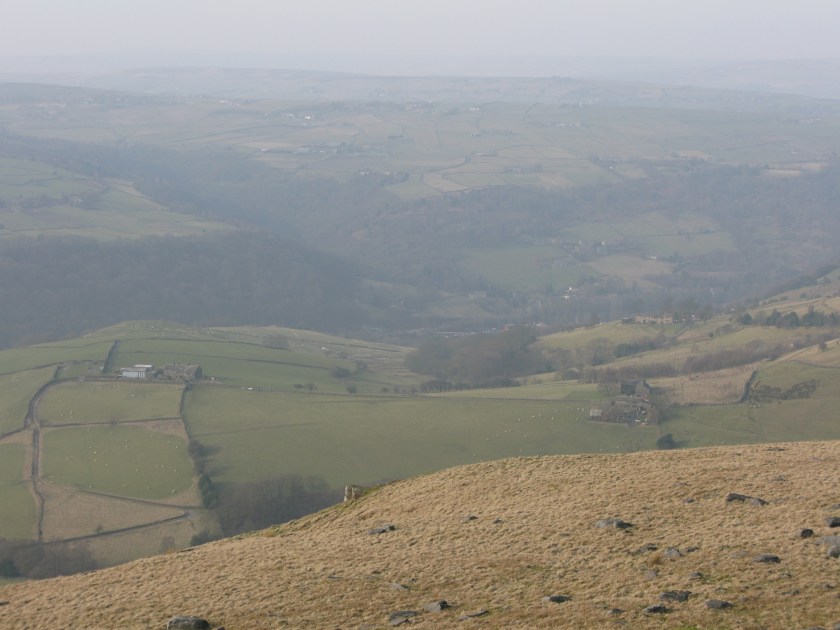
After more of a climb than I really needed near the end of the day, the views from the monument back down into Calderdale and on to the hills I had traversed earlier were spectacular.

IMG_2921Day 3 Route: Ponden to Mankinholes via Pennine Way. Terrain: moorland, Pennine Way flagstones, fields, all undulating. Weather: mostly sunny, some high cloud. Daily distance: 23.3 km/14.4 miles. Cumulative distance: 67.7 km/41.6 miles. Accommodation: Mankinholes youth hostel
March 12, 2016: The first hard day


The second day of a long walk tends to be the hardest.  On the first day one has fresh muscles, novelty, and a comfortable night in one’s own bed. On the second day one is stiff, sore, and the scale of the challenge starts to become apparent.  I was particularly nervous on this second day because, despite my plans to have an easy first few days, the need to find accommodation meant today was a long day with two high moorland ridges to cross.

The morning was still hazy when I left Gargrave.

IMG_2889There were, however, signs of spring about.
IMG_2895

What he’s not telling you is that the ground underneath him is sodden from the very wet winter we’ve had. It makes every step an effort, as you have to wrench your boot from the suction of the ground for each step.

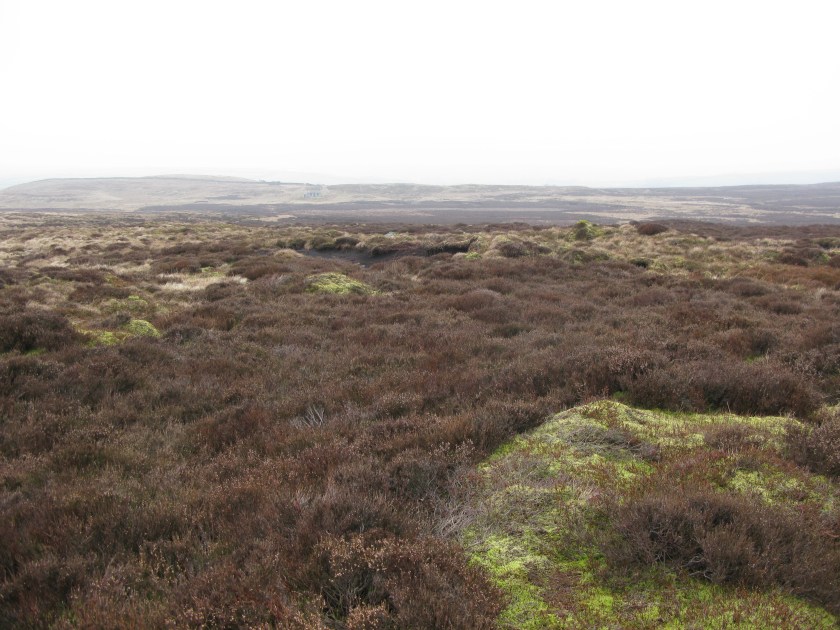
It was almost a relief to reachieve the moorland.  It’s amazing terrain, intimidating in its bleakness and the scarcity of features for navigation.

IMG_2901

In The Hound of the Baskervilles the warning was given: “If you value your life, stay away from the moor”, and one can see why – one would not care to be lost up here. Even on a clear day like today, it was a relief when the field wall I was aiming for came into view.

IMG_2902.JPG

Ans shortly afterward I was at my B&B, tired but not exhausted, and starting to think that completing this mad project might actually be possible. A long hard day, but doable.

Route: Gargrave to Ponden via Pennine Way.  Terrain: rolling fields, high moorlands. Weather: cool, overcast, dry but threatening rain. Daily distance: 25.8 km/16.0 miles. Cumulative distance: 44.4 km/27.2 miles. Accommodation: Ponden House B&B, Ponden.

March 11, 2016: The first day

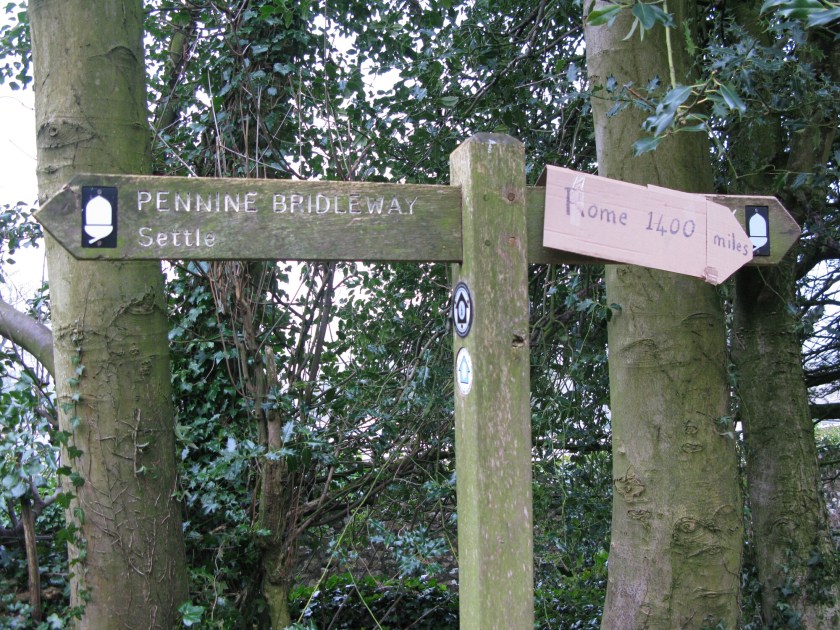
Cool, dry, and overcast: perfect walking weather.  My neighbours Oscar and Kirsten had made some signs to mark my departure.

img_2858.jpg

They and their mum Jo walked the first few hundred yards with me to see me off.

My plan was to give myself an easy first few days, to get used to walking with a pack.  As well, the first few days are across the Pennine hills and moors, which is probably the roughest and most demanding terrain on the English section of the walk.

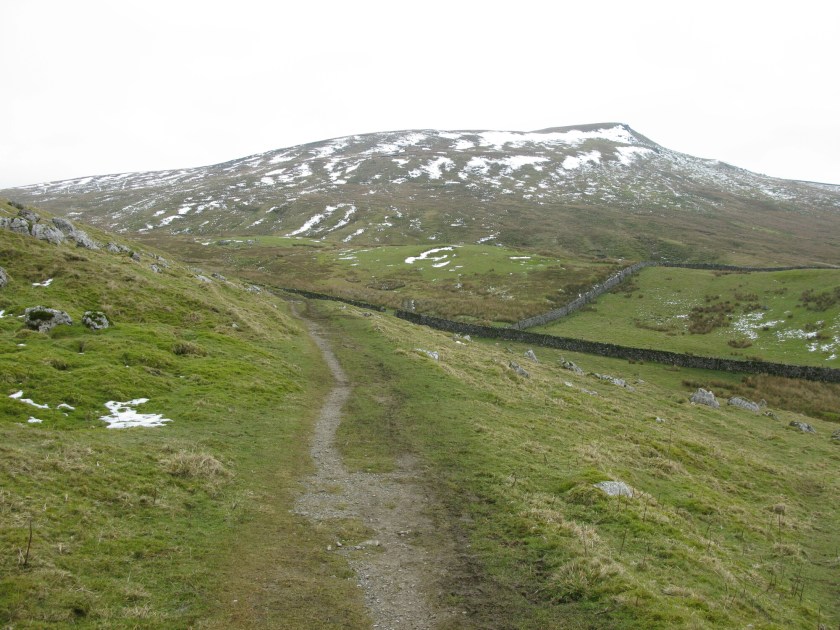
The first stretch of the walk took me over the high moorland between Ribblesdale and Malhamdale.  The high fells were still mottled with snow,  which occasionally also covered the trail.

img_2868.jpg

When I stopped for a tea in Malham,  two women in the cafe saw my passport in my wallet and thought it was hilarious – they asked me if I was going far.  I told them.  I think they thought I was either joking or mad.

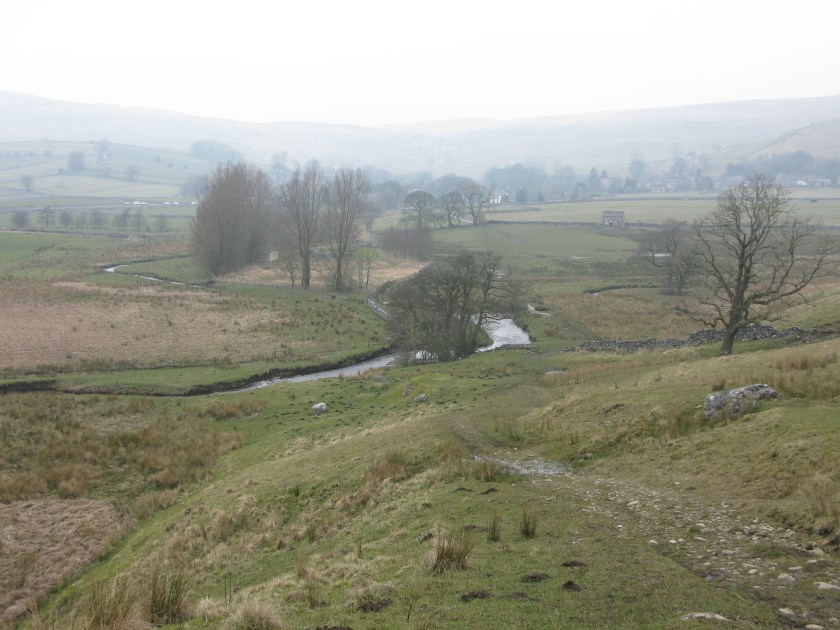
The rest of the day was easy walking along the River Aire, hardly more than a stream at first, and then across fields to Gargrave.

img_2875.jpg

img_2884.jpg

I arrived in Gargrave early enough to sit and relax by the river for an hour before heading for the night’s accommodation. A good first day – not too long, no rain, no routefinding issues, and a comfortable pub at the end of the walk.

Day 1 Route: Settle to Malham via Stockdale Lane, then to Gargrave via Pennine Way. Terrain: high moors, riverside paths, fields. Weather: cool, dry, mostly overcast with sunshine occasionally breaking through. Daily distance: 18.6 km, 11.2 miles. Cumulative Distance: 18.6 km, 11.2 miles. Accommodation: Mason’s Arms, Gargrave.